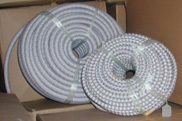
Palmer No-Bake Mold and
Core Vent Tubing
PalmerVent for Rammed Cores & Molds
PalmerVent is placed in the sand away from the surface and terminates at a core print. It is most beneficial when placed in sand projections on a core that are going to be surrounded with metal. It is essential that the venting not contact the surface of the core because that will allow molten metal to run into the vent blocking the escape of gases and actually increasing the chances of gas defects. It is also important to make certain that metal does not run into the vent from the core print area. If the core print is not tight, core muds or rope gaskets must be used to eliminate metal from running into the vent. Documentation – for quality assuranceTo ensure replications, we recommend that the vent location be documented in core pictures or drawings so that all coremakers place the same size vent in nearly the same area in every core. The picture or drawing should indicate the diameter of the venting material, the distance from the core surface that it is to be placed, and the core print that it is to be terminated. Coresetting documentation should indicate the importance of preventing molten metal running into the print area. Sometimes it is necessary to provide a vertical escape route in the mold portion of the mold from the print through the cope mold or out through the parting line. Cold Box CoresGenerally it is more challenging to incorporate synthetic venting in Cold Box cores because the venting will move as the sand is blown into the core box and it will be against the surface of the core. Occasionally, if the core has the potential to place a reinforcing rod from a print, it is possible to wrap the venting around the rod is a spiral fashion and it will allow gas to escape along the rod. The venting can be incorporated in hand rammed molds horizontally from a core print to the external side of the mold (and can be used to vent mold projections from the top or bottom). Occasionally some of the larger diameter venting is used to allow room for sand expansion preventing hot tears. |
|
Description
|
Available in:
|
General Usage Procedure
|
|
Prevention of Defects with VentingClick here to View Article (English). Click here to View Article (Spanish). |
|
|
Click here to request vent tubing samples. |
|
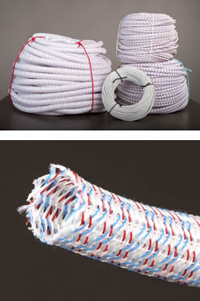 Providing an easy way for trapped gases to escape from either a core or mold is critically important in preventing defects. PalmerVent is made of synthetic venting material, specifically to provide a path for evolved gases to escape from a core or mold. The resulting reduction in gas pressure within the core prevents porosity and blow defects in the casting. Synthetic venting is generally used in hand rammed cores although it can also be used in molds.